
(Zaragoza. Monday, December 15, 2025). An international team made up of 16 researchers from 12 scientific institutions in Spain, the United Kingdom, France, and the United States, led by Dr. Juan Pedro Rodríguez-López, an ARAID researcher affiliated with the GEOtransfer group of the Institute for Environmental Sciences of Aragón (IUCA) at the University of Zaragoza, has confirmed the existence of a glaciation at extremely low latitudes during the Cretaceous (82.8–80.96 million years ago). This discovery overturns a deeply rooted idea within the scientific community: that during the Cretaceous, and more broadly throughout the Mesozoic (252–66 million years ago), Earth existed in a supergreenhouse state—an extremely warm, ice-free climate in which some of the highest global temperatures in the planet’s history were reached.
A paradigm shift in past climate modelling: implications for the future
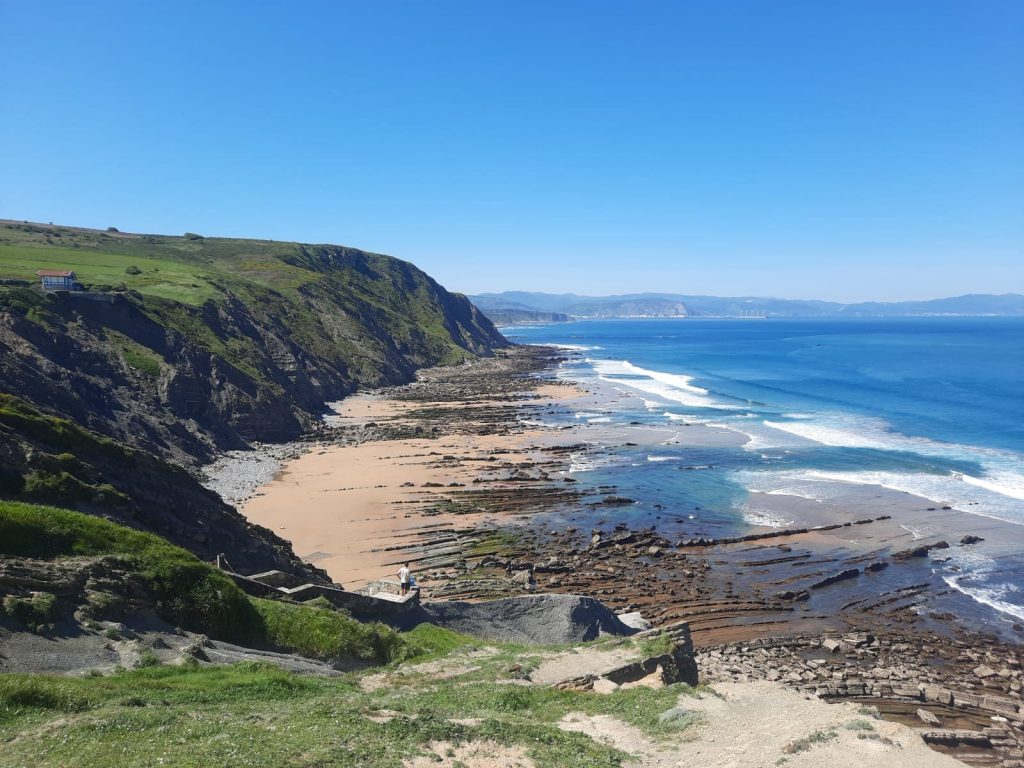
This discovery, made within the framework of the DEEPICE project directed by Dr. Rodríguez-López, directly contradicts the view of an ice-free planet during the Cretaceous, a period for which global temperatures have been modelled close to historical maxima. “The data documented at Barrika require a profound reassessment of the paleoclimatic indicators currently in use and suggest that the geochemical tools employed to reconstruct past temperatures may have systematically overestimated Cretaceous paleotemperatures,” states Dr. Rodríguez-López.
The accuracy of future global climate change projections critically depends on our understanding of these past events. Cryosphere degradation is a first-order climate feedback process that can amplify or dampen global change. The Barrika study provides critical data to refine global paleoclimate models and to better understand the Earth system’s response under conditions of extreme global warming.
These findings are part of the DEEPICE project, dedicated to studying the evolution of climate throughout Earth’s history and funded by the Government of Aragón through an ARAID research start-up grant. The project is designed to document previously unknown cryospheric systems during periods that have been modelled or categorized as supergreenhouse or greenhouse climates. The Barrika outcrop, just 16 km north of Bilbao, not only offers one of the best-preserved glaciomarine records on Earth, but will also serve as a global benchmark for glacial sedimentology and as a terrestrial analogue for the study of icy moons and planets.
International collaboration and cutting-edge methodology
This discovery was made possible through international collaboration among researchers from the ARAID Foundation, the University of Zaragoza, the University of the Basque Country, the University of Jaén, the University of Barcelona, the Autonomous University of Madrid, the University of Sussex, the University of St Andrews, the European Synchrotron Radiation Facility (ESRF) in Grenoble, Middlebury College in Vermont, and the University of California, Santa Barbara.
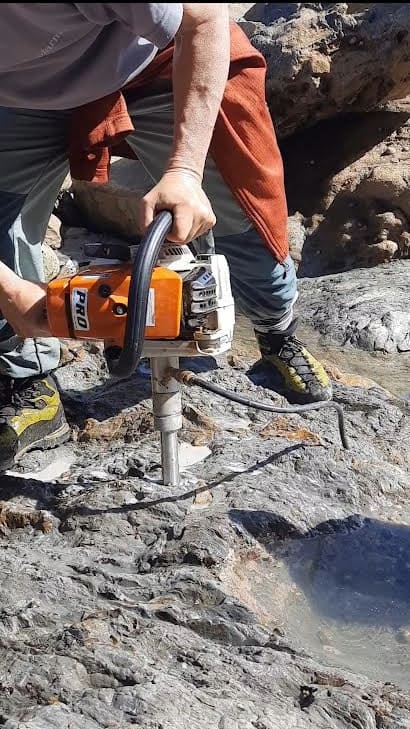
This collaboration enabled the use of a state-of-the-art multiproxy methodology to characterize the Barrika Glaciation, integrating high-resolution sedimentological analyses, calcareous nannofossil biostratigraphy, scanning electron microscopy, micro- and nano–X-ray computed tomography (conducted at the ESRF), and U–Pb geochronology of calcites performed in two laboratories in the United States. This approach will establish new international standards for the identification of cryptic glaciations throughout the Mesozoic.