

(Zaragoza, Tuesday, 23 June 2026). These days, Aragón and much of Spain are experiencing the first heatwave of the summer of 2026. In Zaragoza, reaching temperatures of 40°C was historically an exceptional occurrence. However, over the last two decades, this threshold has been recorded more frequently, sometimes for several consecutive days, alongside a growing number of tropical nights.
“This change should not be interpreted as an isolated anomaly, but rather as a signal consistent with the recent evolution of the climate and with the projections available for the coming decades,” explains Miguel Ángel Saz, co-author of the recently published book Urban Climate of Zaragoza: The Heat Island and Deputy Director of the Institute for Environmental Sciences Research of Aragón (IUCA). From the institute, researchers stress the need to strengthen adaptation strategies to the current climate context, in which episodes of extreme temperatures are becoming more frequent, longer-lasting and more intense.
Mitigation measures, particularly those aimed at reducing greenhouse gas emissions, remain essential. However, the immediate urgency requires decisive progress in adaptation strategies that reduce the population’s exposure and vulnerability to these events, especially in urban areas.
In cities, heatwaves are intensified by the urban heat island effect, that is, the accumulation of heat in densely built-up areas compared with their peri-urban or rural surroundings. In Zaragoza, for example, more than one-third of the population experiences significant temperature increases during the summer, particularly in areas of the Centro Districtand the Historic Quarter, where limited vegetation and high land occupation reduce thermal comfort.
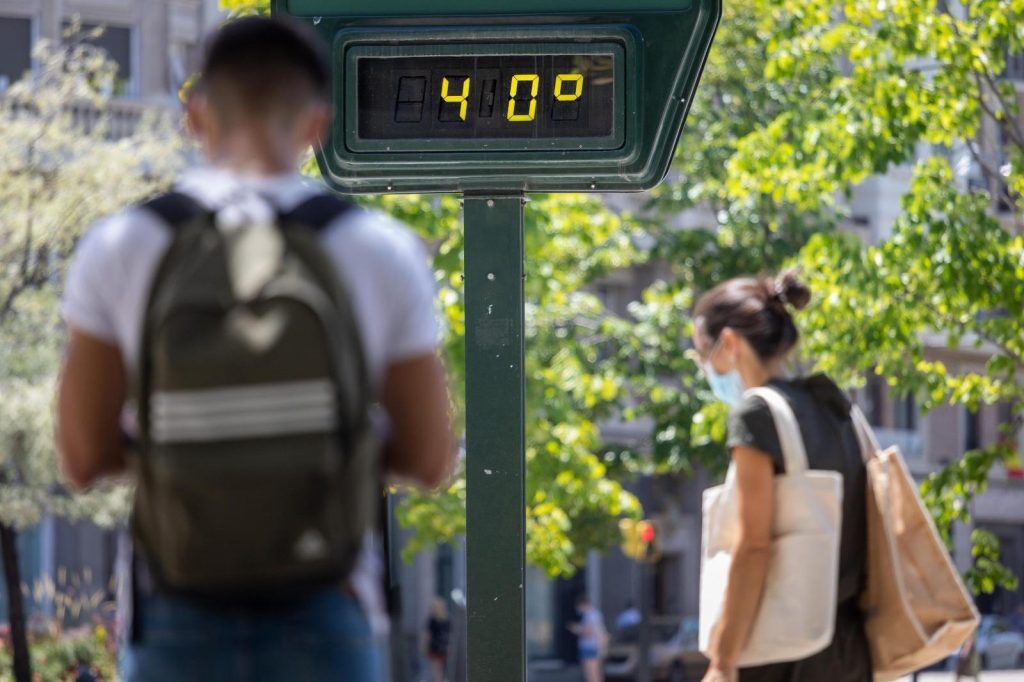
This heat accumulation is especially significant at night, when minimum temperatures may remain high and hinder the population’s thermal recovery. In Zaragoza, measurements taken in different urban environments show that, during certain episodes, nighttime temperatures within the city can exceed those recorded at the reference station of the Spanish Meteorological Agency (AEMET), located at Zaragoza Airport, by several degrees Celsius—up to 7°C in winter and 5°C in summer.
“Heatwaves can no longer be treated as exceptional events. They constitute a recurring climate risk that requires planning, anticipation and coordination among public administrations. Adapting our cities and territories to the new climate context is an environmental, health and social obligation,” stresses Saz.
These conditions affect different parts of the city unevenly, having a greater impact on older people and socially vulnerable groups, while also making nighttime rest, daily mobility and physical and mental health more difficult. This reality was highlighted by the exhibition Zaragoza: Map by Map. The Effects of Climate on the City and Its Inhabitants, promoted by the IUCA last February at the Faculty of Philosophy and Arts.
“From the IUCA, we believe it is necessary for urban and territorial planning to incorporate the reality of climate change in a cross-cutting way, particularly the increasing frequency and intensity of extreme heat events,” says Miguel Ángel Saz. He argues that “adaptation cannot be limited to individual recommendations during high-risk days; it must become part of housing, urban planning, mobility, public health, education, employment, social services and public space management policies.”
In this regard, researchers from the Climate, Water, Global Change and Natural Systems research group, which includes the authors of the book Urban Climate of Zaragoza: The Heat Island, led by Professor of Regional Geographic Analysis José María Cuadrat, urge public administrations to advance measures such as improving thermal comfort in buildings and public facilities, reviewing certain outdoor work activities during extreme heat episodes, increasing shaded and green areas, reducing heat-accumulating urban surfaces, identifying vulnerable populations and systematically incorporating urban climatology into city transformation projects.