

(Zaragoza, Wednesday, 18 March 2026). Today we live on a relatively cold planet, with large permanent ice masses at the poles. However, during the age of the dinosaurs and until about 34 million years ago, Earth was very different: a “greenhouse world” prevailed, with warmer global temperatures and no permanent glaciers.
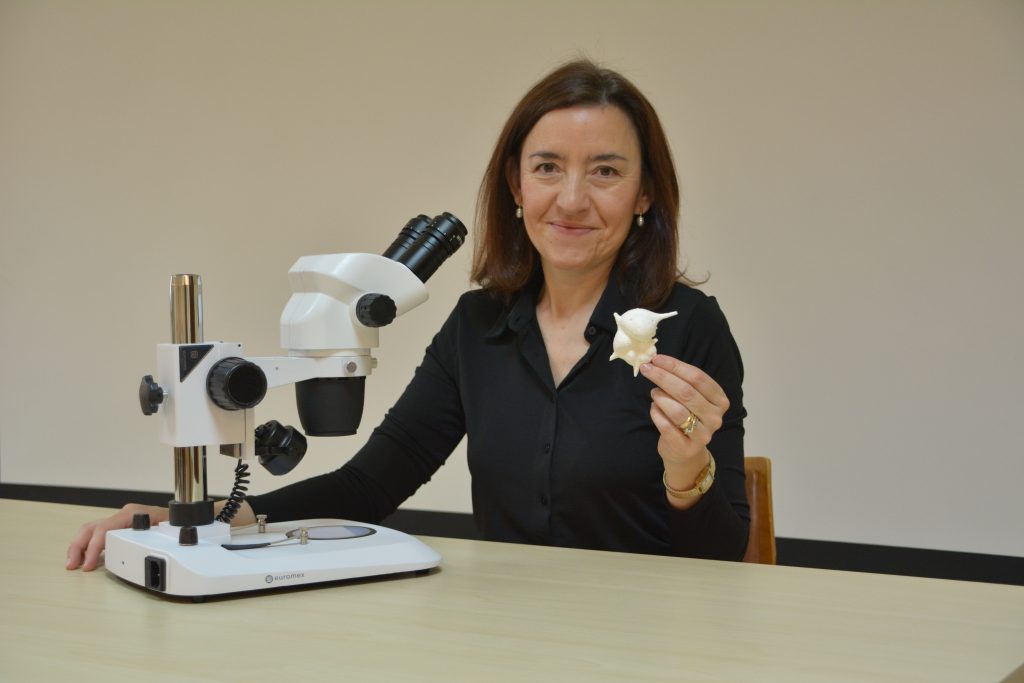
A new international study published in Nature Communications, involving Laia Alegret, Professor of Paleontology at the University of Zaragoza and researcher at the Aragon Environmental Sciences Institute (IUCA), examines how marine life responded to one of the major climatic shifts in Earth’s history: the transition from that warm planet to a cooler one.
This change was first identified in the early 20th century. In 1910, scientists called it the “Grande Coupure” (“great break”) after observing a profound reorganization of mammal faunas in Europe: species adapted to warm climates disappeared and were replaced by others associated with colder environments, many of them arriving from Asia. Among the new inhabitants of the European landscape were rhinoceroses, ancestors of modern cattle and pigs, hamsters, beavers, and hedgehogs, while several groups of herbivores and the earliest relatives of European monkeys vanished.
The trigger for this climatic transformation appears to have been the formation of ice in Antarctica. As the Antarctic continent drifted toward the South Pole due to continental drift, conditions gradually became favorable for ice formation. This cooling was a prolonged process, partly driven by the opening of the Drake Passage between South America and Antarctica. This event allowed the establishment of the Antarctic Circumpolar Current, which isolated the cold waters surrounding Antarctica from those of the Atlantic and Pacific oceans.
Temperatures dropped by 5 to 10 degrees Celsius, depending on the region, over an interval of roughly 400,000 years. To understand how life responded to this shift, the international team led by Zhengbo Lu from Nanjing Universityanalyzed a massive dataset of foraminifera, marine microorganisms that protect their single cell with a shell. After death, their shells accumulate on the seafloor, forming one of the most abundant and continuous fossil records in the history of the oceans.
The study reveals the complex response of these organisms: species living in shallow and surface waters experienced significant extinction, while those inhabiting deeper marine environments responded positively to the cooling and were largely unaffected by the growth of glaciers. The results suggest that deep waters acted as more stable environments compared to the upper ocean layers, which were strongly affected by climate change.
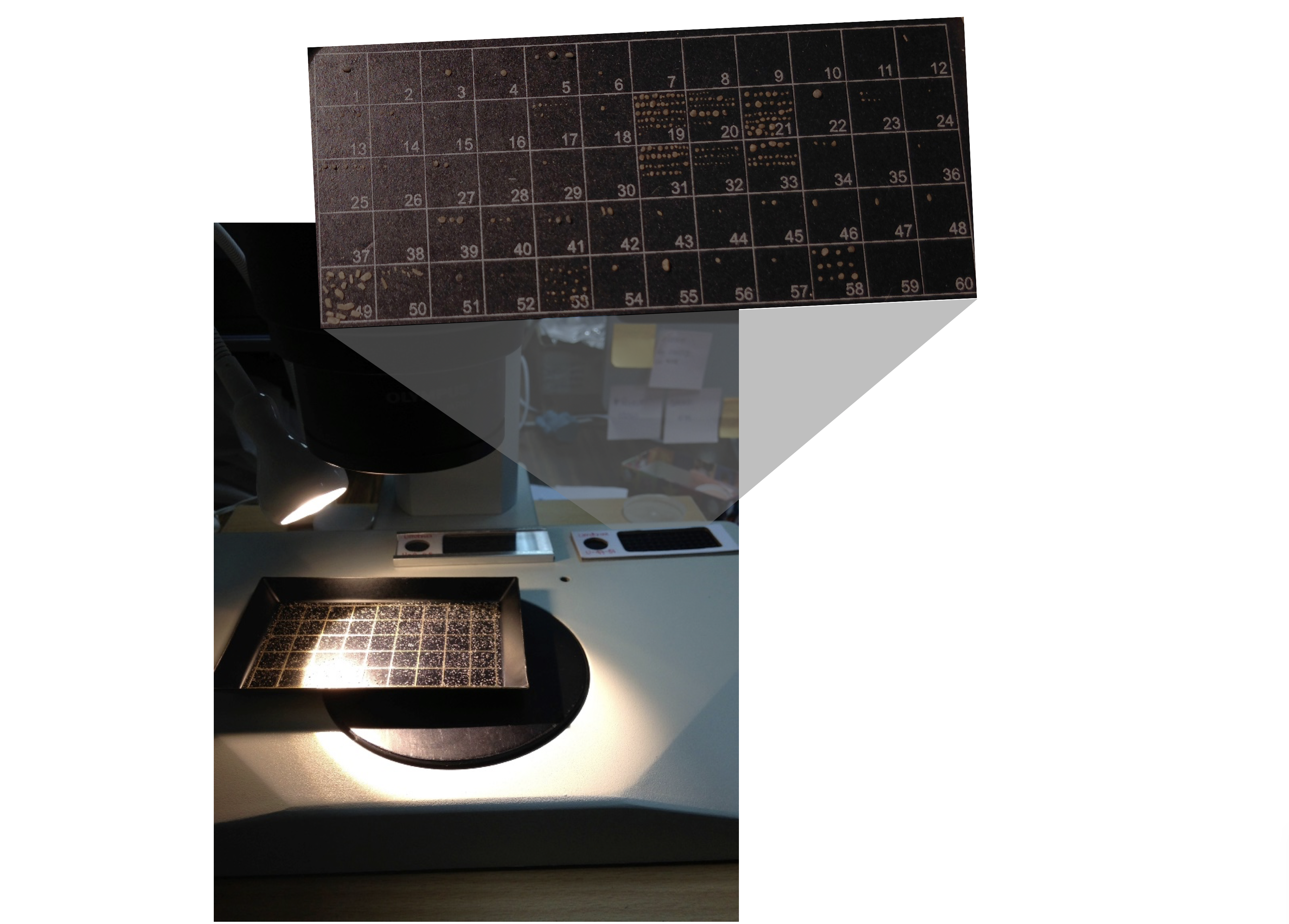
To reach these conclusions, the research team — composed of scientists from institutions in China, the United Kingdom, the United States, and Spain — analyzed more than 40,000 microfossil records from 161 sites around the world. The complexity of the dataset led the Nanjing University group to develop a new analytical method based on artificial intelligence, capable of correlating and chronologically ordering all samples with high precision.
Inspired by biological evolution, the algorithm treats each possible correlation between samples as if it were a “DNA sequence.” It then subjects these sequences to processes analogous to mutation, recombination, and natural selection. After millions of iterations, it identifies the most consistent and parsimonious global correlation among all records.
The results make it possible to reconstruct, with unprecedented detail, the history of foraminiferal diversity during this major climatic transition.
For the past 34 million years, Earth has remained in a relatively cold climatic state, with permanent ice sheets at the poles. The current climate forms part of this long period, to which modern ecosystems — including humans — have adapted. However, the release of greenhouse gases due to human activity is driving a gradual warming of the planet, which could once again lead toward climatic conditions more similar to those that dominated much of Earth’s earlier history.
This study provides a detailed reconstruction of the last major climatic transition on Earth, from a greenhouse climate to the colder conditions that have characterized the planet for the past 34 million years.